
By God, they weren't kidding. There really is an island, Seil by name, that you can get to by road. By a beautiful old stone bridge, in fact. You see that little piddly creek of a thing underneath it? Believe it or not, that's the Atlantic Ocean. Well, part of it anyway. Kind of a small part; but it's the sea. Salt water and all. Rises and falls with the tide. How about that?

Pretty little flowers growing all over the old stonework, too. I am informed that they are called the "fairy foxglove." Whatever.

We got off the bus at the bridge so we could walk across the Atlantic Ocean a couple of times. Then we set out down the road to wherever the road went to.

The road ran roughly south along the east side of the island. On the right the ground was hilly and rough, and just now alive with flowering plants. I don't know what that yellow stuff is but it was all over the place.
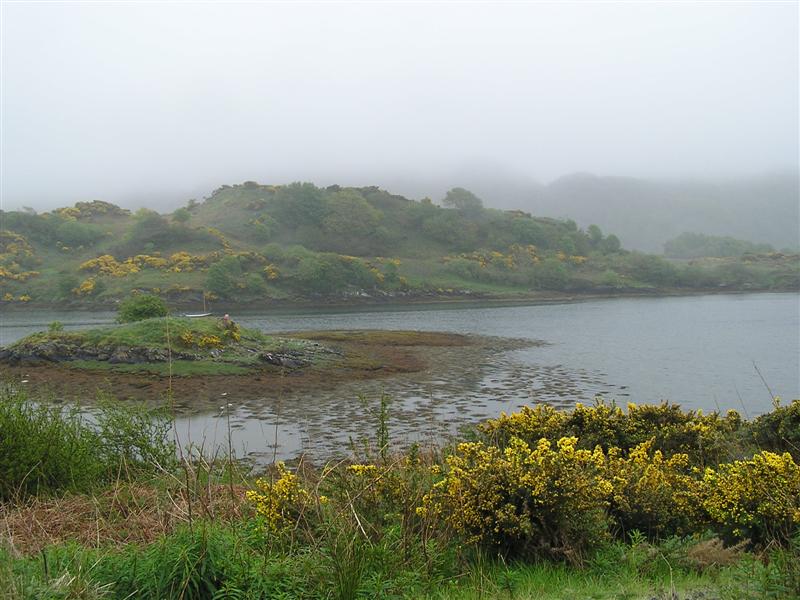
To the left the ground fell away to a low mushy shoreline, with the mainland visible just a short distance away through the fog.

The sheep were everywhere. Spring, of course, and lambs bouncing around all over the place.


Haggis on the hoof.
It was raining lightly now, off and on. Or the fog was getting dense enough to feel like rain. It was hard to tell. We walked on, jumping off the road repeatedly to get out of the way of the demented local drivers, not making very fast progress.
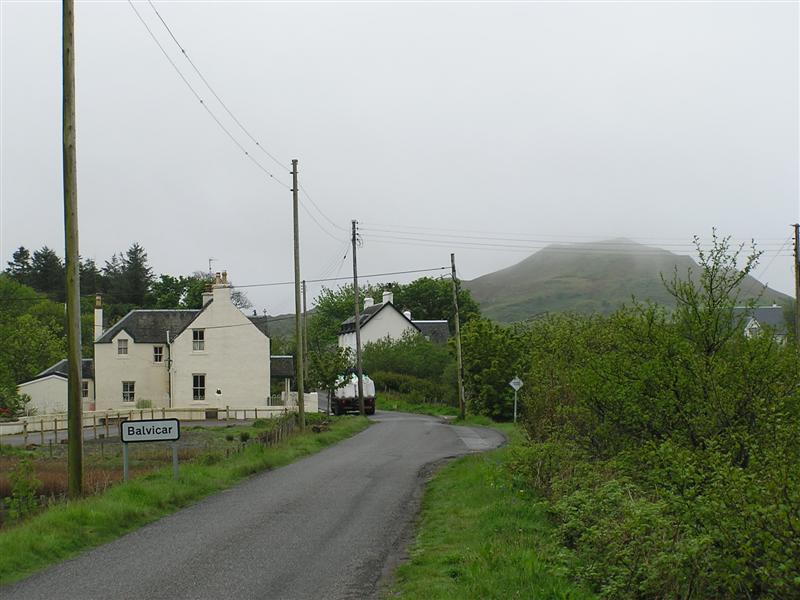
And came at last to the village or hamlet or at any rate small locality of Balvicar. It didn't look like much but at that point we were just humbly relieved to find that we had gotten somewhere.
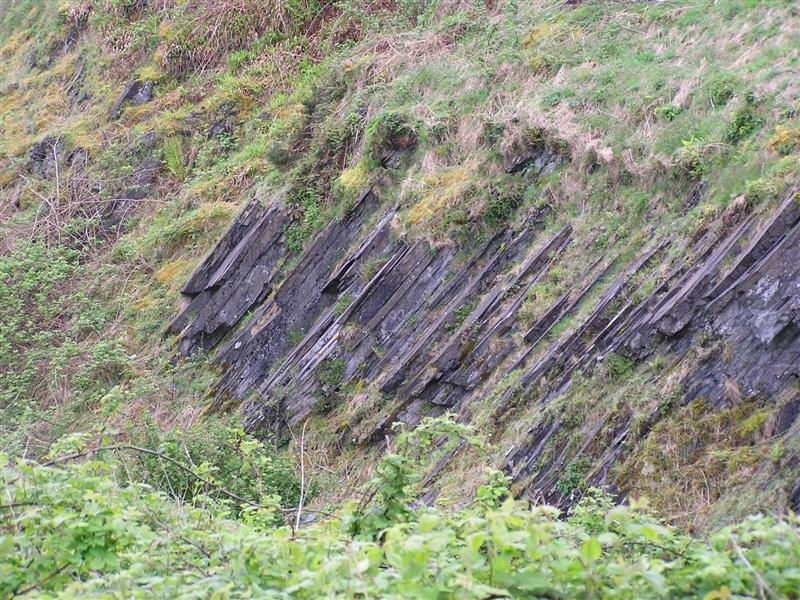
These islands used to be called the Slate Islands because they contain great layers of slate, which was once in great demand as roofing material. The industry died out a long time ago for various reasons, but the locals still work the slate for their own roofing needs. Kind of an interesting idea: your place needs a new roof, you go out and dig it up.


We walked down a side road to the tiny port. Not many people were out and about; the fog seemed to have shut maritime operations down.
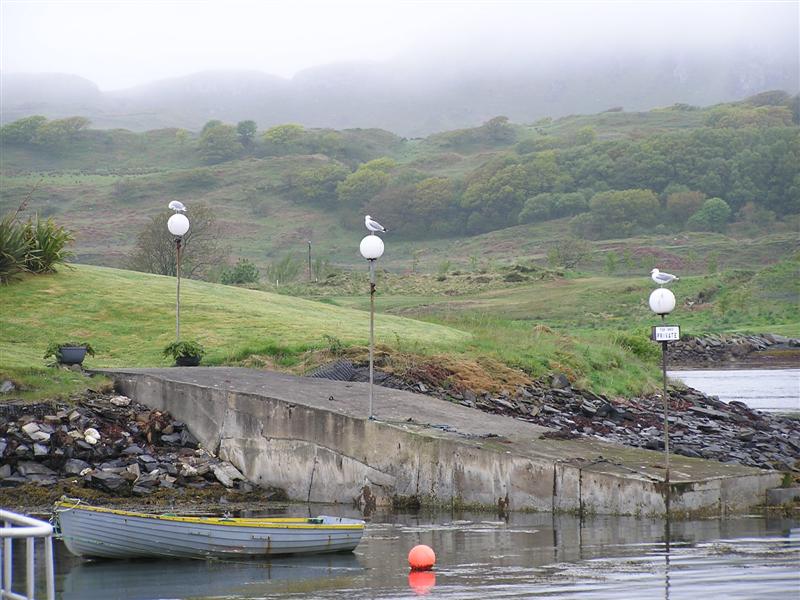
Even the ubiquitous gulls were finding places to sit it out.
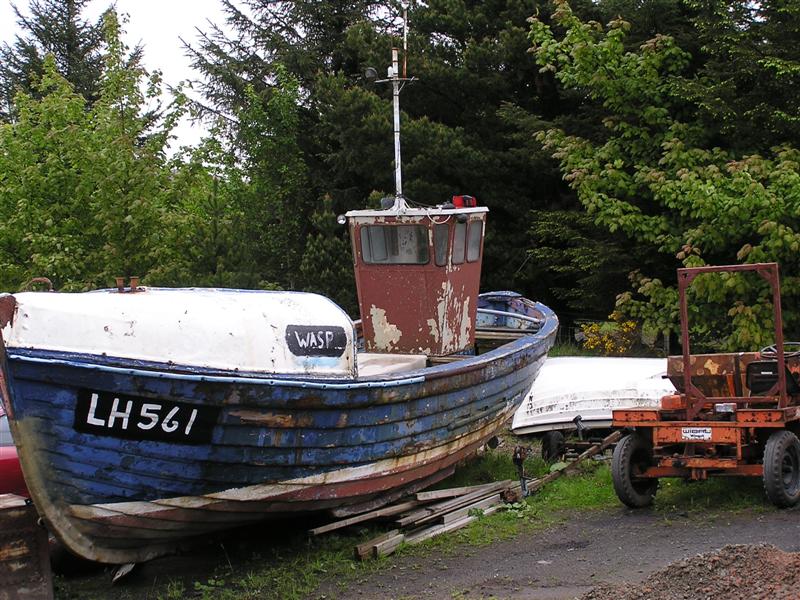

We walked back up to the main road and caught the next bus that came by, on down to the southern tip of the island. The country got higher and wilder-looking the farther south we went, with more sheep and great strange-looking hairy cattle on the hillsides. Finally the bus doubled back and climbed over the high backbone of the mountain toward the western coast.
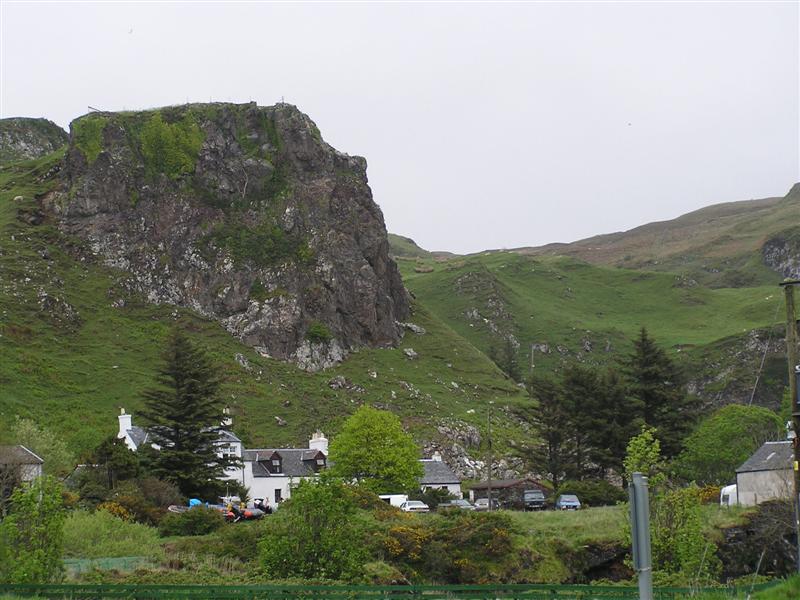
Easdale, on the far western side of the island, is a spread-out place, pretty heavily built up, and - from what I could see of it - touristy as hell. The setting is beautiful, though.

We stood around looking at the sea and the shore for half an hour or so until the driver was ready to head back. We had the bus to ourselves at first and we thought that was rather grand. Then at a little crossroads up the hill from Easdale the bus stopped and about a million school children got on. OK, there were only about a dozen of them but on that little bus, and at their volume level (exactly equivalent to that of a comparable number of American primary-school kids in the same space), it seemed like more. We looked at each other and cracked up. The noise diminished gradually as the bus dropped them off at various places, till finally the last ones were gone . I rather missed them.
Back in Oban at last we found a pub with an upstairs room and had dinner. Oban itself wasn't as much fun as last year; for some reason the town was overrun with geriatric tourists. They must have come in some sort of group; they were all over the place, in bunches, and they all looked about twenty years older than God. It was like being in a big nursing home. But that was all right; we weren't spending much time in Oban anyway. It was mostly just a base of operations, to check out the islands and see what we missed last year.
NEXT: Lismore Again